understanding the synonyms of tangent helps you communicate ideas more clearly especially when describing conversations, writing academically, or explaining concepts in math. The word tangent is quite flexible, and its meaning changes depending on context. That’s why learning its alternatives can improve both your vocabulary and accuracy.
Whether you’re a student, ESL learner, writer, or content creator, knowing when to replace tangent with a better-fitting word makes your communication smoother and more natural. This guide will walk you through simple meanings, examples, and practical usage so you can confidently use these words in real life.
What Does “Tangent” Mean?
The word tangent has three main meanings:
1. In Conversation
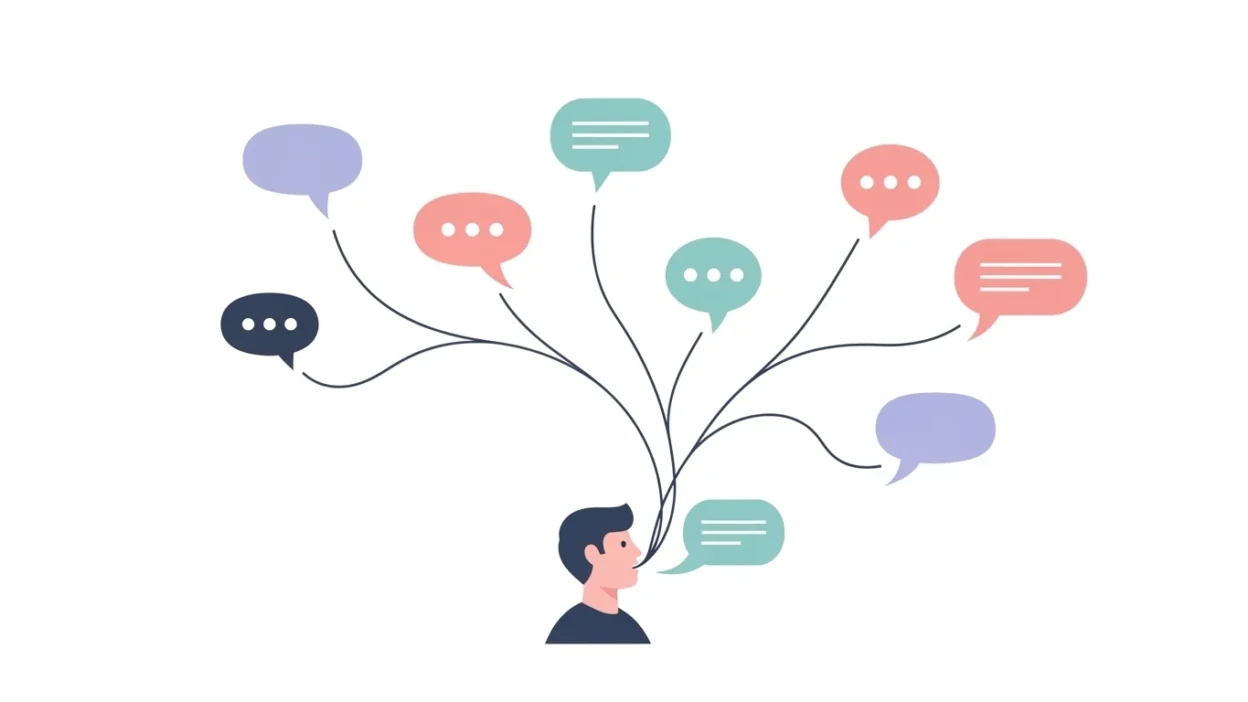
A tangent is when someone goes off-topic or talks about something unrelated.
Example:
He went off on a tangent during the meeting.
2. In Mathematics
A tangent is a line that touches a curve at exactly one point.
y=tan(x)
3. In General Ideas
It can also mean something slightly related but not directly connected.
Example:
That idea is only tangent to the main topic.
30 Synonyms of Tangent (With Meanings, Examples & Usage)
Conversation / Off-topic Meaning
1. Digression
- Meaning: A shift away from the main topic
- Example: The lecture included a long digression.
- Context: Formal writing/speaking
2. Deviation
- Meaning: Moving away from the main path
- Example: The discussion took a deviation.
- Context: Formal
3. Aside
- Meaning: A brief off-topic comment
- Example: She made an aside during her speech.
- Context: Casual/formal
4. Detour
- Meaning: A temporary change in direction
- Example: The talk made a detour into history.
- Context: Informal
5. Sidetrack
- Meaning: To distract from the main topic
- Example: Don’t sidetrack the discussion.
- Context: Informal
6. Divergence
- Meaning: Moving in a different direction
- Example: There was a divergence in ideas.
- Context: Academic
7. Distraction
- Meaning: Something that pulls focus away
- Example: The tangent became a distraction.
- Context: General
8. Interruption
- Meaning: A break in flow
- Example: His comment was an interruption.
- Context: General
9. Drift
- Meaning: Gradual movement away from topic
- Example: The talk drifted away from the subject.
- Context: Casual
10. Ramble
- Meaning: Talking without clear direction
- Example: He tends to ramble in meetings.
- Context: Informal
Mathematics Meaning
11. Tangent line
- Meaning: Line touching a curve at one point
- Example: Draw the tangent line to the circle.
- Context: Geometry
12. Instantaneous slope
- Meaning: Slope at a single point
- Example: The tangent shows instantaneous slope.
- Context: Calculus
13. Touching line
- Meaning: Informal explanation of tangent
- Example: The touching line meets once.
- Context: Beginner math
14. Linear approximation
- Meaning: Using a tangent to estimate values
- Example: Use linear approximation here.
- Context: Advanced math
15. Gradient at a point
- Meaning: Rate of change at a point
- Example: Find the gradient at that point.
- Context: Academic
General / Related Idea Meaning
16. Offshoot
- Meaning: A branch from the main idea
- Example: The theory is an offshoot of research.
- Context: Writing
17. Branch
- Meaning: Subdivision of a topic
- Example: This is a branch of the discussion.
- Context: General
18. Extension
- Meaning: A continuation of an idea
- Example: His thought was an extension.
- Context: Neutral
19. Spin-off
- Meaning: New idea from another
- Example: The show is a spin-off.
- Context: Informal
20. Connection
- Meaning: A link between ideas
- Example: There is a weak connection.
- Context: General
21. Link
- Meaning: A relationship
- Example: There’s a link to the topic.
- Context: General
22. Association
- Meaning: A mental or logical connection
- Example: The idea has an association.
- Context: Formal
23. Relation
- Meaning: Connection between things
- Example: It has little relation to the topic.
- Context: General
24. Parallel
- Meaning: Similar but separate idea
- Example: There’s a parallel idea here.
- Context: Analytical
25. Side note
- Meaning: Extra, less important point
- Example: As a side note, this matters too.
- Context: Casual
Additional Useful Synonyms
26. Breakaway
- Meaning: Moving away suddenly
- Example: The talk had a breakaway moment.
- Context: Informal
27. Shift
- Meaning: Change in direction
- Example: There was a shift in focus.
- Context: General
28. Twist
- Meaning: Unexpected change
- Example: The topic took a twist.
- Context: Informal
29. Diverge
- Meaning: To separate or move apart
- Example: The ideas diverge here.
- Context: Formal
30. Wander
- Meaning: Move without direction
- Example: His thoughts wander often.
- Context: Casual
Comparison Guide: When to Use Each Synonym
| Situation | Best Synonyms |
|---|---|
| Casual conversation | Aside, ramble, drift, side note |
| Formal writing | Digression, deviation, divergence |
| Academic/math | Tangent line, gradient, approximation |
| Idea expansion | Offshoot, branch, extension |
| Slight relation | Link, connection, association |
How to Choose the Right Synonym
Choosing the right word depends on tone and intent:
1. For Off-Topic Conversation
Use: digression, ramble, aside, sidetrack
👉 Best when someone changes the subject.
2. For Formal or Academic Use
Use: deviation, divergence, association
👉 Sounds more professional and precise.
3. For Mathematics
Use: tangent line, slope, gradient
👉 Use only in math-related contexts.
4. For Related Ideas
Use: offshoot, branch, extension
👉 When ideas are connected but not central.
5. For Casual Tone
Use: side note, drift, wander
👉 Easy and conversational.
Final Thoughts
Learning the synonyms of tangent helps you become a more flexible and confident communicator. Since tangent can mean different things—like going off-topic, touching a curve, or being loosely related—its synonyms also vary widely.
By understanding these differences, you can choose the perfect word for every situation, whether you’re writing an essay, having a conversation, or solving a math problem.
Keep practicing these words in real sentences, and your vocabulary will grow naturally over time.