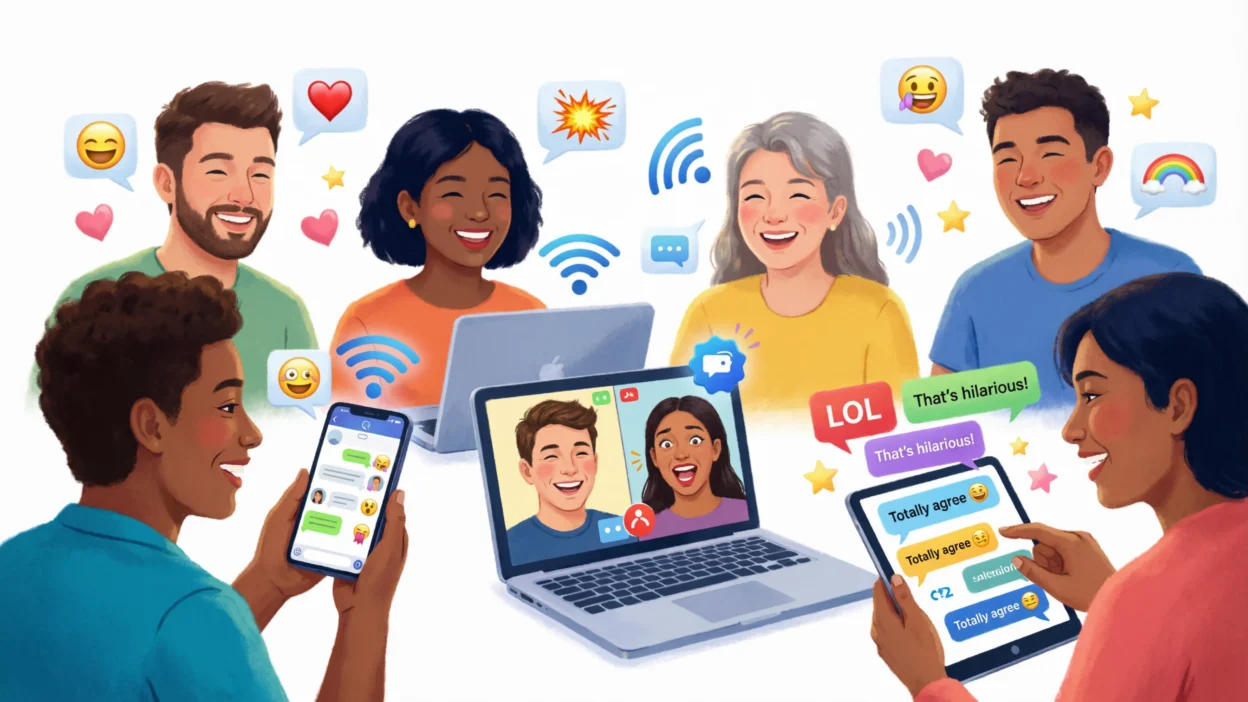
The abbreviation LOL is one of the most popular internet expressions used in text messages, social media posts, online chats, and casual conversations. Learning the synonyms of LOL can help students, ESL learners, writers, and content creators add variety to their communication and express laughter in different ways.
Whether you’re chatting with friends, responding to memes, or writing informal content, knowing alternatives to LOL can make your messages feel more natural, expressive, and engaging.
What Does “LOL” Mean?
LOL stands for “Laughing Out Loud.”
It is commonly used to:
- Show amusement
- React to something funny
- Express lightheartedness
- Add humor to conversations
Example Sentences
- LOL, that joke made my day.
- I accidentally wore two different shoes today LOL.
- Her comment was so funny that everyone replied with LOL.
Usage Tip
Use LOL in casual conversations, text messages, social media interactions, and informal writing.
30 Synonyms of LOL (With Meanings, Examples & Usage)
1. Haha
Meaning: A simple expression of laughter.
Example: Haha, that’s a great joke!
Best Usage Context: Everyday texting.
2. Hahaha
Meaning: Stronger laughter than “haha.”
Example: Hahaha, I can’t believe that happened.
Best Usage Context: Casual chats.
3. Hehe
Meaning: Soft, playful laughter.
Example: Hehe, I knew the surprise would work.
Best Usage Context: Friendly conversations.
4. LMAO
Meaning: A stronger expression of laughter.
Example: LMAO, that video is hilarious.
Best Usage Context: Social media and texting.
5. ROFL
Meaning: Rolling on the floor laughing.
Example: ROFL, I wasn’t expecting that ending.
Best Usage Context: Internet slang.
6. ROTFL
Meaning: Rolling on the floor laughing.
Example: ROTFL, that’s the funniest meme today.
Best Usage Context: Online communication.
7. LMFAO
Meaning: Extremely intense laughter.
Example: LMFAO, that story is unbelievable.
Best Usage Context: Very informal chats.
8. Giggle
Meaning: Light and cheerful laughter.
Example: She giggled at the funny comment.
Best Usage Context: Writing and storytelling.
9. Chuckle
Meaning: A quiet laugh.
Example: He chuckled while reading the message.
Best Usage Context: Casual and formal writing.
10. Snicker
Meaning: A restrained or secret laugh.
Example: The students snickered during the joke.
Best Usage Context: Narrative writing.
11. Guffaw
Meaning: Loud and hearty laughter.
Example: The comedian’s joke caused a guffaw.
Best Usage Context: Descriptive writing.
12. Cackle
Meaning: Loud, sharp laughter.
Example: The crowd cackled at the humorous scene.
Best Usage Context: Creative writing.
13. Crack Up
Meaning: To laugh very hard.
Example: That movie always cracks me up.
Best Usage Context: Casual speech.
14. Burst Out Laughing
Meaning: To suddenly start laughing.
Example: Everyone burst out laughing at the punchline.
Best Usage Context: Storytelling.
15. Belly Laugh
Meaning: Deep, hearty laughter.
Example: The joke gave us a good belly laugh.
Best Usage Context: Informal conversations.
16. Die Laughing
Meaning: Laugh extremely hard.
Example: You’ll die laughing when you watch it.
Best Usage Context: Casual speech.
17. In Stitches
Meaning: Laughing so much it hurts.
Example: The audience was in stitches.
Best Usage Context: Informal writing.
18. Howl with Laughter
Meaning: Laugh very loudly.
Example: They howled with laughter at the performance.
Best Usage Context: Strong amusement.
19. Roar with Laughter
Meaning: Laugh loudly as a group.
Example: The theater roared with laughter.
Best Usage Context: Events and performances.
20. Teehee
Meaning: Playful or mischievous laughter.
Example: Teehee, I kept it a secret.
Best Usage Context: Informal messaging.
21. Bahaha
Meaning: Exaggerated laughter.
Example: Bahaha, that’s ridiculous!
Best Usage Context: Online chats.
22. Lulz
Meaning: Internet slang for amusement.
Example: They shared the clip for the lulz.
Best Usage Context: Online communities.
23. Smirk
Meaning: A slight amused smile.
Example: He smirked at the clever response.
Best Usage Context: Storytelling.
24. Grin
Meaning: A broad smile showing amusement.
Example: She grinned at the funny story.
Best Usage Context: Everyday language.
25. Amused
Meaning: Finding something entertaining.
Example: He seemed amused by the conversation.
Best Usage Context: Formal and informal writing.
26. Entertained
Meaning: Pleasantly amused.
Example: The audience was entertained throughout the show.
Best Usage Context: Professional contexts.
27. Snort
Meaning: Laugh suddenly through the nose.
Example: He snorted with laughter.
Best Usage Context: Humorous situations.
28. Laugh Out Loud
Meaning: The full phrase behind LOL.
Example: The joke made me laugh out loud.
Best Usage Context: General use.
29. Crack a Smile
Meaning: Show slight amusement.
Example: Even the serious manager cracked a smile.
Best Usage Context: Casual conversations.
30. Laugh
Meaning: Express amusement vocally.
Example: We all laughed at the joke.
Best Usage Context: Universal use.
Comparison Table: When to Use Different LOL Synonyms
| ContextBest Synonyms | |
|---|---|
| Text Messages | Haha, Hahaha, Hehe |
| Social Media | LMAO, ROFL, ROTFL |
| Casual Conversations | Crack Up, Belly Laugh, Die Laughing |
| Storytelling | Chuckle, Snicker, Guffaw |
| Professional Writing | Amused, Entertained |
How to Choose the Right Synonym
For Texting and Chatting
Use:
- Haha
- Hahaha
- Hehe
For Strong Reactions
Use:
- LMAO
- ROFL
- LMFAO
For Writing Stories
Use:
- Chuckle
- Snicker
- Guffaw
For Group Laughter
Use:
- Roar with Laughter
- Howl with Laughter
- Burst Out Laughing
For Professional Communication
Use:
- Amused
- Entertained
- Laugh Out Loud
Conclusion
Learning the synonyms of LOL can make your online conversations and writing more expressive and enjoyable. While LOL remains one of the most recognized internet abbreviations, alternatives such as haha, chuckle, guffaw, ROFL, and belly laugh help convey different levels and styles of humor.

A passionate linguist who specializes in word relationships and vocabulary building.
He has spent years studying synonyms and semantic patterns across languages.
Arman writes to make language learning simple, precise, and engaging.