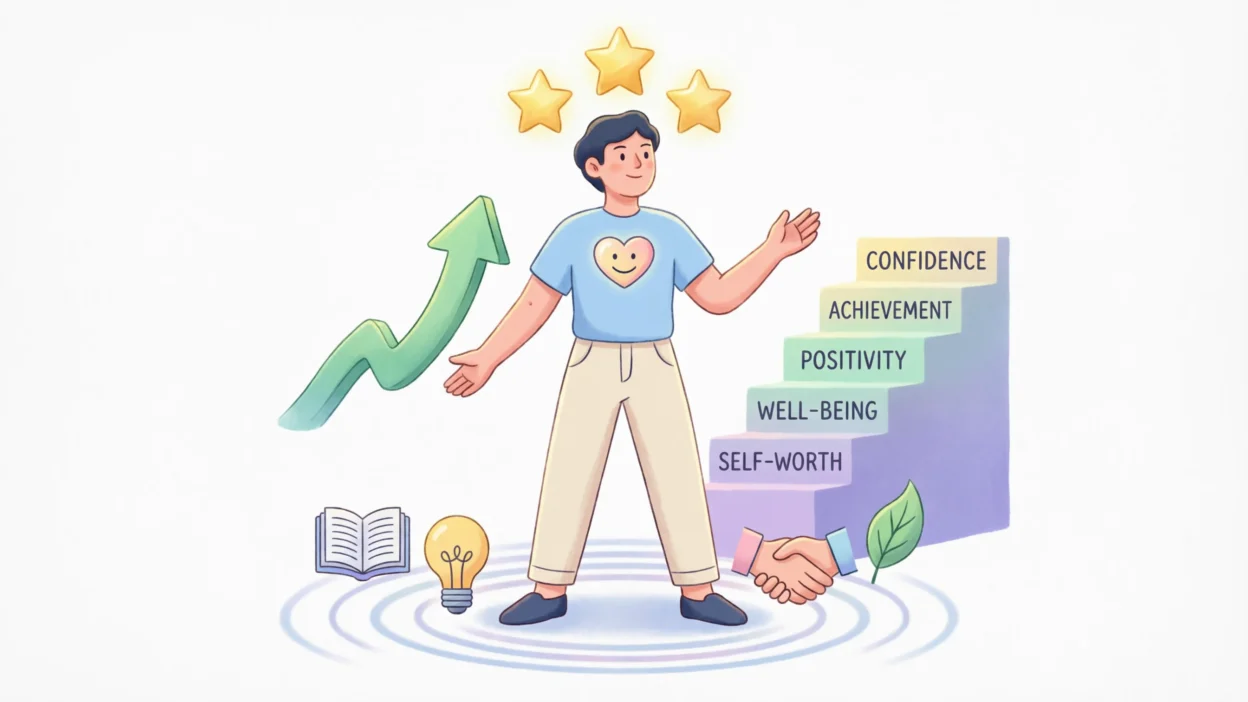
Self-esteem is an important concept in psychology, personal development, education, and everyday life. Learning the synonyms of self-esteem can help students, ESL learners, writers, and content creators express ideas about confidence, self-worth, and personal value more effectively.
Whether you’re writing about mental well-being, personal growth, leadership, or motivation, understanding different alternatives to self-esteem can make your communication clearer and more engaging.
What Does “Self-Esteem” Mean?
Self-esteem refers to:
- Confidence in your own abilities
- A sense of self-worth or personal value
- Respect and appreciation for yourself
- A positive view of your identity and capabilities
Example Sentences
- Healthy self-esteem helps people handle challenges more effectively.
- Building self-esteem can improve overall well-being.
- Teachers play an important role in developing students’ self-esteem.
Usage Tip
Use self-esteem when discussing confidence, self-respect, emotional well-being, or personal development
1. Self-Respect
Meaning: Respect and appreciation for yourself.
Example: Self-respect helps people maintain healthy boundaries.
Best Usage Context: Personal growth and relationships.
2. Self-Worth
Meaning: The belief that you have value as a person.
Example: Everyone deserves to recognize their self-worth.
Best Usage Context: Psychology and personal development.
3. Confidence
Meaning: Belief in your abilities.
Example: Confidence can improve performance.
Best Usage Context: Everyday conversations.
4. Self-Confidence
Meaning: Trust in your own skills and judgment.
Example: Public speaking can build self-confidence.
Best Usage Context: Education and career growth.
5. Self-Belief
Meaning: Faith in your potential.
Example: Self-belief helped her achieve her goals.
Best Usage Context: Motivation and success.
6. Pride
Meaning: Satisfaction in yourself or your achievements.
Example: He felt pride in his accomplishments.
Best Usage Context: Personal achievements.
7. Self-Regard
Meaning: The opinion you have of yourself.
Example: Positive self-regard supports emotional health.
Best Usage Context: Psychology.
8. Dignity
Meaning: A sense of personal honor and worth.
Example: Everyone deserves to be treated with dignity.
Best Usage Context: Ethics and personal values.
9. Assurance
Meaning: Confidence and certainty.
Example: She spoke with assurance during the presentation.
Best Usage Context: Professional settings.
10. Self-Assurance
Meaning: Confidence in oneself.
Example: His self-assurance impressed the audience.
Best Usage Context: Leadership and communication.
11. Positive Self-Image
Meaning: A favorable view of yourself.
Example: Exercise can contribute to a positive self-image.
Best Usage Context: Mental health discussions.
12. Self-Appreciation
Meaning: Recognizing your own value.
Example: Self-appreciation is an important life skill.
Best Usage Context: Personal development.
13. Self-Acceptance
Meaning: Accepting yourself as you are.
Example: Self-acceptance promotes happiness.
Best Usage Context: Emotional well-being.
14. Self-Trust
Meaning: Confidence in your decisions.
Example: Self-trust grows through experience.
Best Usage Context: Decision-making.
15. Self-Reliance
Meaning: Dependence on your own abilities.
Example: Self-reliance encourages independence.
Best Usage Context: Personal growth.
16. Inner Confidence
Meaning: Deep personal confidence.
Example: Inner confidence often comes with experience.
Best Usage Context: Motivation.
17. Personal Pride
Meaning: Satisfaction in who you are.
Example: Personal pride motivated him to do his best.
Best Usage Context: Achievement and growth.
18. Self-Value
Meaning: The worth you assign to yourself.
Example: Strong self-value leads to healthier choices.
Best Usage Context: Psychology.
19. Self-Recognition
Meaning: Awareness of your strengths and value.
Example: Self-recognition helps build confidence.
Best Usage Context: Personal development.
20. Self-Empowerment
Meaning: Taking control of your own growth.
Example: Education encourages self-empowerment.
Best Usage Context: Motivation and leadership.
21. Morale
Meaning: Confidence and enthusiasm.
Example: Team morale improved after the success.
Best Usage Context: Groups and organizations.
22. Poise
Meaning: Calm confidence and grace.
Example: She handled the situation with poise.
Best Usage Context: Professional and social settings.
23. Security
Meaning: Feeling confident and safe in yourself.
Example: Emotional security contributes to happiness.
Best Usage Context: Relationships and psychology.
24. Self-Approval
Meaning: Being satisfied with yourself.
Example: Self-approval should not depend entirely on others.
Best Usage Context: Mental health.
25. Self-Knowledge
Meaning: Understanding your strengths and weaknesses.
Example: Self-knowledge improves decision-making.
Best Usage Context: Personal development.
26. Self-Awareness
Meaning: Understanding your thoughts and behaviors.
Example: Self-awareness is a key leadership skill.
Best Usage Context: Psychology and leadership.
27. Self-Possession
Meaning: Confidence and emotional control.
Example: She maintained self-possession during the interview.
Best Usage Context: Formal writing.
28. Inner Strength
Meaning: Emotional resilience and confidence.
Example: Inner strength helped him overcome difficulties.
Best Usage Context: Inspirational writing.
29. Personal Confidence
Meaning: Confidence in oneself.
Example: Personal confidence can grow through practice.
Best Usage Context: General communication.
30. Healthy Self-Image
Meaning: A balanced and positive perception of yourself.
Example: A healthy self-image supports emotional well-being.
Best Usage Context: Psychology and education.
Comparison Table: When to Use Different Self-Esteem Synonyms
| Context | Best Synonyms |
|---|---|
| Personal Growth | Self-Worth, Self-Belief, Self-Acceptance |
| Confidence Building | Confidence, Self-Confidence, Self-Assurance |
| Mental Health | Positive Self-Image, Self-Value, Self-Appreciation |
| Leadership | Self-Trust, Poise, Self-Awareness |
| Relationships | Self-Respect, Dignity, Security |
How to Choose the Right Synonym
For Personal Development
Use:
- Self-Worth
- Self-Belief
- Self-Acceptance
For Confidence and Success
Use:
- Confidence
- Self-Confidence
- Self-Assurance
For Emotional Well-Being
Use:
- Positive Self-Image
- Self-Appreciation
- Healthy Self-Image
For Leadership and Professional Growth
Use:
- Self-Trust
- Poise
- Self-Awareness
For Respect and Personal Values
Use:
- Self-Respect
- Dignity
- Self-Value
Conclusion
Learning the synonyms of self-esteem can help you communicate ideas about confidence, self-worth, and personal growth more effectively. While self-esteem is the most common term, alternatives such as self-respect, self-worth, confidence, and self-belief can provide greater variety and precision in your writing.
Choosing the right synonym based on context will make your communication more meaningful, engaging, and impactful.

A creative writer with a deep interest in word usage and meaning.
He explores synonyms to enhance both academic and creative expression.
Zayn’s work aims to make language richer and more accessible for everyone.