The word appear is commonly used in English to describe something becoming visible, seeming a certain way, or making an arrival. Learning the synonyms of appear can help students, ESL learners, writers, and content creators improve their vocabulary and express ideas more accurately.
Whether you’re writing an essay, story, blog post, or professional document, knowing different alternatives to appear can make your writing more engaging and less repetitive.
What Does “Appear” Mean?
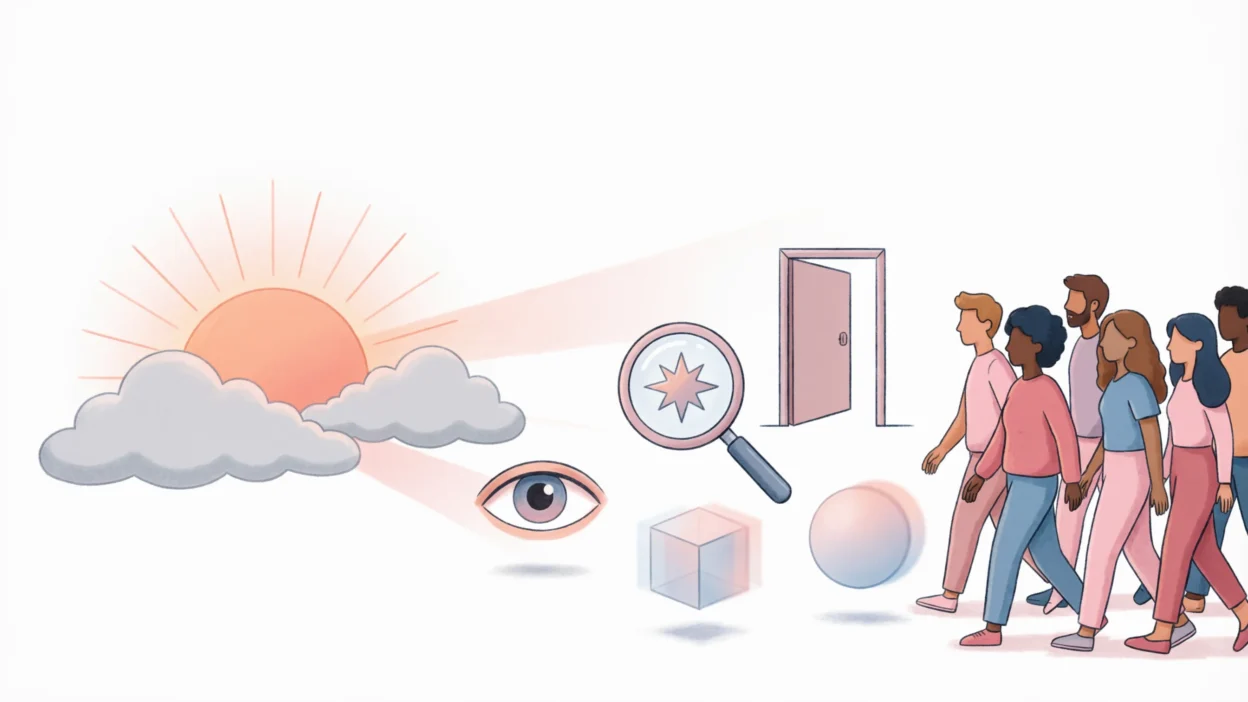
Appear can have several meanings, including:
- To become visible
- To come into sight
- To seem or look a certain way
- To arrive or be present somewhere
Example Sentences
- A rainbow appeared after the storm.
- She appeared confident during the interview.
- The actor appeared on stage to loud applause.
Usage Tip
Use appear when talking about something becoming visible, showing up, or seeming to be a certain way.
30 Synonyms of Appear (With Meanings, Examples & Usage)
1. Seem
Meaning: To give the impression of being something.
Example: He seems happy today.
Best Usage Context: Describing impressions or opinions.
2. Look
Meaning: To appear visually.
Example: She looks tired after the trip.
Best Usage Context: Everyday conversations.
3. Emerge
Meaning: To come into view gradually.
Example: The sun emerged from behind the clouds.
Best Usage Context: Nature and storytelling.
4. Surface
Meaning: To become visible or known.
Example: New evidence surfaced during the investigation.
Best Usage Context: News and reports.
5. Materialize
Meaning: To suddenly become visible or real.
Example: The solution finally materialized.
Best Usage Context: Creative and formal writing.
6. Show Up
Meaning: To arrive or become visible.
Example: He showed up late to the meeting.
Best Usage Context: Informal conversations.
7. Arrive
Meaning: To reach a destination.
Example: The guests arrived on time.
Best Usage Context: Travel and events.
8. Come Into View
Meaning: To become visible.
Example: The mountain came into view at sunrise.
Best Usage Context: Descriptive writing.
9. Manifest
Meaning: To become evident or obvious.
Example: Her talent manifested early in life.
Best Usage Context: Formal writing.
10. Present Itself
Meaning: To become noticeable.
Example: An opportunity presented itself unexpectedly.
Best Usage Context: Professional and formal contexts.
11. Turn Up
Meaning: To appear unexpectedly.
Example: He turned up at the party without notice.
Best Usage Context: Informal speech.
12. Pop Up
Meaning: To appear suddenly.
Example: A notification popped up on the screen.
Best Usage Context: Technology and casual use.
13. Arise
Meaning: To come into existence.
Example: Problems may arise during the project.
Best Usage Context: Formal writing.
14. Become Visible
Meaning: To be seen.
Example: The stars became visible after sunset.
Best Usage Context: General descriptions.
15. Reveal Itself
Meaning: To become known or seen.
Example: The truth revealed itself over time.
Best Usage Context: Storytelling and formal writing.
16. Display
Meaning: To show or present.
Example: The chart displays the results clearly.
Best Usage Context: Academic and professional writing.
17. Exhibit
Meaning: To show a quality or characteristic.
Example: She exhibited great confidence.
Best Usage Context: Formal communication.
18. Attend
Meaning: To be present at an event.
Example: Hundreds attended the conference.
Best Usage Context: Meetings and events.
19. Feature
Meaning: To be included or presented.
Example: The magazine features a famous actor.
Best Usage Context: Media and publishing.
20. Debut
Meaning: To appear publicly for the first time.
Example: The singer debuted a new song.
Best Usage Context: Entertainment and business.
21. Crop Up
Meaning: To appear unexpectedly.
Example: Issues cropped up during testing.
Best Usage Context: Informal writing.
22. Occur
Meaning: To happen or take place.
Example: The problem occurred suddenly.
Best Usage Context: Formal and academic use.
23. Break Through
Meaning: To emerge visibly or successfully.
Example: The sunlight broke through the clouds.
Best Usage Context: Descriptive writing.
24. Loom
Meaning: To appear as a large or threatening presence.
Example: Dark clouds loomed overhead.
Best Usage Context: Creative writing.
25. Rise
Meaning: To move upward and become visible.
Example: The moon rose above the horizon.
Best Usage Context: Nature descriptions.
26. Unfold
Meaning: To gradually become known.
Example: Events unfolded quickly.
Best Usage Context: Storytelling and reporting.
27. Become Apparant
Meaning: To become clear or obvious.
Example: The mistake became apparent later.
Best Usage Context: Formal communication.
28. Open Up
Meaning: To reveal or expose.
Example: New possibilities opened up after graduation.
Best Usage Context: Personal growth and opportunities.
29. Show
Meaning: To make visible or evident.
Example: The results show improvement.
Best Usage Context: Everyday and professional use.
30. Come Forth
Meaning: To emerge or appear.
Example: Several witnesses came forth with information.
Best Usage Context: Formal and literary writing.
Comparison Table: When to Use Different Appear Synonyms
| ContextBest Synonyms | |
|---|---|
| Seeming a Certain Way | Seem, Look, Exhibit |
| Becoming Visible | Emerge, Surface, Materialize |
| Arriving Somewhere | Show Up, Arrive, Turn Up |
| Formal Writing | Manifest, Present Itself, Arise |
| Storytelling | Loom, Unfold, Come Into View |
How to Choose the Right Synonym
For Everyday Conversations
Use:
- Seem
- Look
- Show Up
For Formal Writing
Use:
- Manifest
- Arise
- Present Itself
For Describing Visibility
Use:
- Emerge
- Surface
- Come Into View
For Events and Attendance
Use:
- Arrive
- Attend
- Debut
For Creative Writing
Use:
- Loom
- Materialize
- Unfold
Conclusion
Learning the synonyms of appear can help you express visibility, arrival, and perception more effectively. While appear is a versatile word, alternatives such as emerge, seem, surface, manifest, and show up can provide greater variety and precision.
By selecting the right synonym for the context, you can make your writing clearer, more engaging, and more professional.

A passionate linguist who specializes in word relationships and vocabulary building.
He has spent years studying synonyms and semantic patterns across languages.
Arman writes to make language learning simple, precise, and engaging.