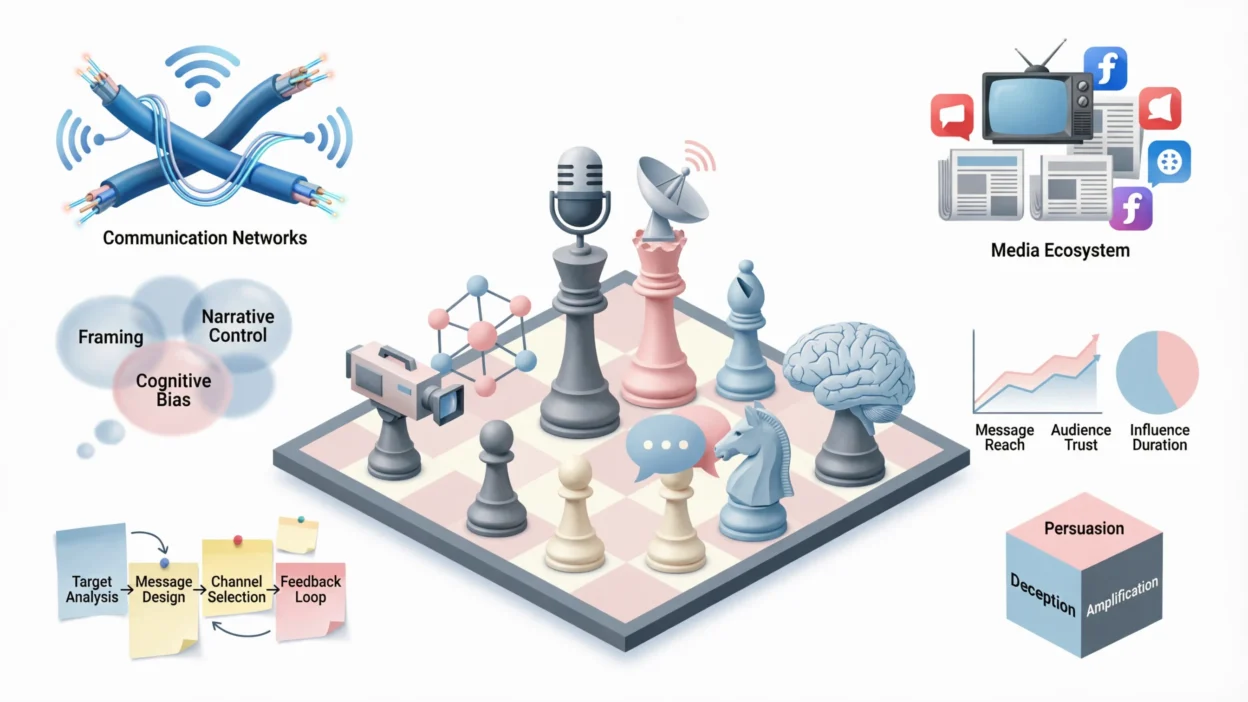
Psychological warfare refers to the use of information, persuasion, intimidation, propaganda, or other non-physical tactics to influence people’s thoughts, emotions, decisions, or behavior. Learning the synonyms of psychological warfare can help students, ESL learners, writers, researchers, and content creators understand this concept and use related vocabulary more effectively.
Whether you’re studying history, military strategy, politics, communication, or psychology, knowing alternatives to psychological warfare can make your writing more precise and nuanced.
What Does “Psychological Warfare” Mean?
Psychological warfare is the practice of using psychological tactics to influence or weaken an opponent’s morale, beliefs, emotions, or decision-making.
It may involve:
- Propaganda
- Persuasion campaigns
- Intimidation
- Disinformation
- Influence operations
- Morale-targeting messages
Example Sentences
- The military used psychological warfare to reduce enemy morale.
- Propaganda played a major role in psychological warfare during the conflict.
- The campaign relied heavily on psychological warfare techniques.
Usage Tip
Use psychological warfare when discussing strategic efforts to influence people’s minds, emotions, or perceptions rather than using direct physical force.
30 Synonyms and Related Terms for Psychological Warfare
1. Psychological Operations (PSYOP)
Meaning: Planned efforts to influence attitudes and behavior.
Example: The military conducted psychological operations during the mission.
Best Usage Context: Military and strategic discussions.
2. Influence Operations
Meaning: Activities designed to shape opinions and decisions.
Example: The organization launched influence operations online.
Best Usage Context: Politics and security.
3. Propaganda
Meaning: Information used to promote a particular viewpoint.
Example: The government distributed propaganda during the war.
Best Usage Context: History and politics.
4. Information Warfare
Meaning: The strategic use of information to gain an advantage.
Example: Information warfare has become increasingly important.
Best Usage Context: Military and cybersecurity.
5. Perception Management
Meaning: Influencing how people interpret events.
Example: The campaign focused on perception management.
Best Usage Context: Public relations and strategy.
6. Persuasion Campaign
Meaning: Organized efforts to change opinions.
Example: The group launched a persuasion campaign.
Best Usage Context: Marketing and politics.
7. Mind Games
Meaning: Psychological tactics used to confuse or pressure others.
Example: The competitor used mind games before the match.
Best Usage Context: Sports and personal interactions.
8. Intimidation Tactics
Meaning: Actions intended to create fear or uncertainty.
Example: The organization relied on intimidation tactics.
Best Usage Context: Security and conflict discussions.
9. Strategic Communication
Meaning: Planned communication to achieve objectives.
Example: Strategic communication helped shape public opinion.
Best Usage Context: Government and business.
10. Disinformation Campaign
Meaning: Deliberate spread of false information.
Example: Investigators uncovered a disinformation campaign.
Best Usage Context: Media and politics.
11. Influence Campaign
Meaning: An organized effort to affect attitudes.
Example: The influence campaign targeted young voters.
Best Usage Context: Politics and marketing.
12. Behavioral Influence
Meaning: Attempts to shape actions and decisions.
Example: Behavioral influence techniques are widely studied.
Best Usage Context: Psychology and communication.
13. Morale Warfare
Meaning: Efforts to weaken confidence and motivation.
Example: Morale warfare was used to discourage opponents.
Best Usage Context: Military history.
14. Information Operations
Meaning: Coordinated use of information to achieve goals.
Example: Information operations supported the broader strategy.
Best Usage Context: Military and cybersecurity.
15. Ideological Campaign
Meaning: Promotion of specific beliefs or values.
Example: The movement conducted an ideological campaign.
Best Usage Context: Politics and history.
16. Persuasion Strategy
Meaning: A planned method of influencing opinions.
Example: The company adopted a new persuasion strategy.
Best Usage Context: Marketing and communication.
17. Reputation Attack
Meaning: Efforts to damage someone’s public image.
Example: The candidate faced a reputation attack.
Best Usage Context: Politics and media.
18. Influence Tactics
Meaning: Methods used to affect behavior or thinking.
Example: Effective leaders understand influence tactics.
Best Usage Context: Leadership and psychology.
19. Narrative Control
Meaning: Shaping the dominant story or interpretation.
Example: Both sides competed for narrative control.
Best Usage Context: Media and politics.
20. Public Opinion Campaign
Meaning: Efforts to influence public attitudes.
Example: The organization launched a public opinion campaign.
Best Usage Context: Social and political issues.
21. Strategic Persuasion
Meaning: Planned attempts to influence beliefs.
Example: Strategic persuasion played a key role.
Best Usage Context: Communication studies.
22. Cognitive Influence
Meaning: Affecting how people think and process information.
Example: Researchers examined cognitive influence techniques.
Best Usage Context: Psychology.
23. Mental Pressure
Meaning: Psychological stress applied to influence behavior.
Example: The negotiations involved significant mental pressure.
Best Usage Context: General discussions.
24. Fear Campaign
Meaning: Efforts that rely on fear to persuade people.
Example: Critics described it as a fear campaign.
Best Usage Context: Politics and media.
25. Manipulation
Meaning: Influencing others in a controlled manner.
Example: The report accused the group of manipulation.
Best Usage Context: Psychology and ethics.
26. Persuasive Messaging
Meaning: Communication designed to influence opinions.
Example: The campaign used persuasive messaging.
Best Usage Context: Advertising and communication.
27. Strategic Influence
Meaning: Deliberate efforts to shape decisions.
Example: Strategic influence is common in diplomacy.
Best Usage Context: International relations.
28. Opinion Shaping
Meaning: Guiding how people think about issues.
Example: Media outlets often engage in opinion shaping.
Best Usage Context: Journalism and politics.
29. Soft Power Tactics
Meaning: Influencing others through attraction and persuasion.
Example: Countries often use soft power tactics internationally.
Best Usage Context: Diplomacy and global affairs.
30. Psychological Pressure
Meaning: Mental or emotional influence used to affect behavior.
Example: The negotiations created psychological pressure.
Best Usage Context: General and professional contexts.
Comparison Table: When to Use Different Psychological Warfare Synonyms
| Context | Best Terms |
|---|---|
| Military Strategy | Psychological Operations, Information Warfare, Morale Warfare |
| Politics | Propaganda, Influence Campaign, Narrative Control |
| Communication | Strategic Communication, Persuasive Messaging, Perception Management |
| Psychology | Cognitive Influence, Manipulation, Behavioral Influence |
| Diplomacy | Soft Power Tactics, Strategic Influence, Influence Operations |
How to Choose the Right Synonym
For Military Discussions
Use:
- Psychological Operations
- Information Warfare
- Morale Warfare
For Politics and Media
Use:
- Propaganda
- Narrative Control
- Influence Campaign
For Communication Studies
Use:
- Strategic Communication
- Persuasive Messaging
- Perception Management
For Psychology Topics
Use:
- Cognitive Influence
- Behavioral Influence
- Psychological Pressure
For International Relations
Use:
- Soft Power Tactics
- Strategic Influence
- Influence Operations
Conclusion
Learning the synonyms of psychological warfare can help you discuss influence, persuasion, communication, and strategic behavior with greater precision. While psychological warfare remains a widely recognized term, alternatives such as psychological operations, information warfare, influence operations, and perception management may better fit specific contexts.